

Same innovation type
Data analysis via ChatGPT
GSEM
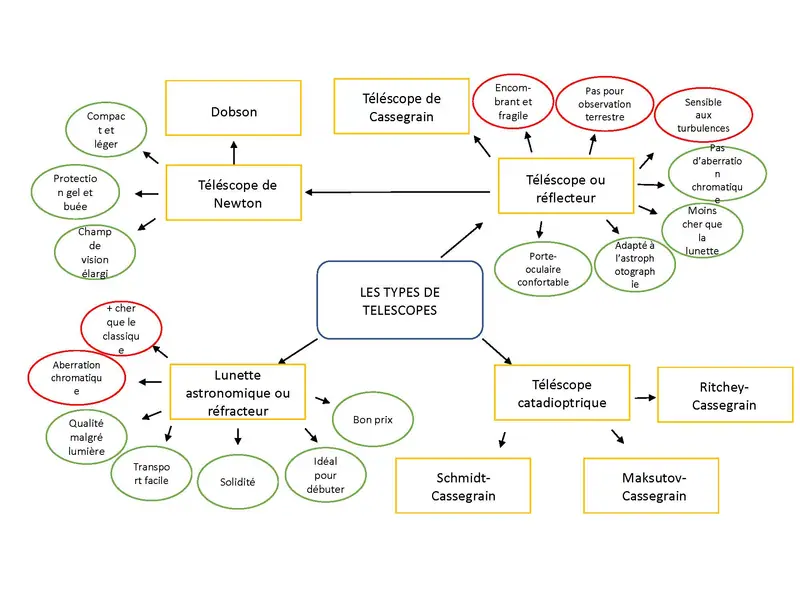
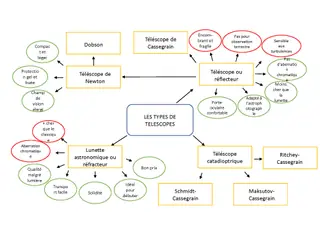
Concept maps help summarize a text by highlighting key ideas and their relationships. Students create their maps individually, compare them in groups and discuss approaches and mistakes for a better overall understanding.


This course aims to improve students’ skills in writing a variety of written materials (revisions, PV, scientific or journalistic summaries). The exhaustive reading of a text, understanding both its content and its logical articulations, represents a major difficulty for students. They often approach the content of the text in a too local or superficial manner and have difficulty freeing themselves from the writing codes specific to the medium used, which impairs their understanding of the “general message” and negatively impacts their translations.
Whether you are writing or summarizing a text, it is important to have a global view of its content. On this point, the creation of a conceptual map can prove to be a facilitator, as it frees you from reading and/or writing word for word. On the one hand, it offers the possibility of representing the structure of the text and its articulation, but above all, it allows us to represent the different elements that make up its content and even to explain the relationships between these elements.
First, the teacher presents the conceptual map at the theoretical level, its usefulness and the various forms in which it can be presented.
Students are then asked to create an individual concept map based on a text proposed by the teacher. They can build it in class or at home and choose the format of their map (paper or digital). The design of the map starts on a sheet of paper with the main theme often presented in the center of the map and then it is elaborated by adding the different elements and their links. The relationships can represent causes, consequences, origins, etc.
The students hand in their finalized maps to the teacher who makes a copy and marks them with comments that aim to point out spelling mistakes (central in a course on written communication), possible problems of coherence (in reading or presentation) and unclear parts. These comments will be given only after the group sharing of the completed cards.
The students divide into groups of 4 and compare their concept maps: they explain their respective approaches, ask each other questions, and note the differences. The groups then pool their findings and have a general discussion on what they found interesting in the exercise.
The teacher draws attention to the fact that it is necessary to verify that the participants are able to carry out the task. It is also important to point out to the students that good drawing skills are not necessary and if necessary to reassure them. It is also always a good idea to remind the students of a few rules before the exchanges within the pairs (no value judgments and mutual respect).
Let us also note that the conceptual map is a tool that can be useful to students when writing their dissertations. It can be used to represent a whole field, the structure of a text or simply its content. The person who draws the map creates his or her own structure, establishing logic in what he or she sees.
Same innovation type

Same innovation type

Same innovation type