


Same innovation type
Partner projects
Transversal
In this course, the teaching approach focuses on the design and production of simple sensors by students.


ISE students (most of whom are non-scientists) lack perspective on data, even though they use it extensively. The aim of this course is to make them realize that data, such as that accessible in online databases, is the result of work, with the decisions and biases that this entails. To encourage them to think about this and give them independence, the teacher suggests they carry out a practical project: choosing a simple type of sensor, designing it, implementing it, and analyzing its measurements.
The course runs over 5 weeks, with the first 2 classes devoted to theory, 2 practical classes for conceptualization and sensor construction, and a final class devoted to pooling projects.
During the two classes devoted to the theoretical introduction, the teacher encourages interactivity. As the students all come from very different backgrounds, the teacher makes this a strength by proposing, for example, an active “one-two-all” exercise. Students are given a question to answer individually, then discuss it with their partner before sharing their answer with the whole class on a post-it note.
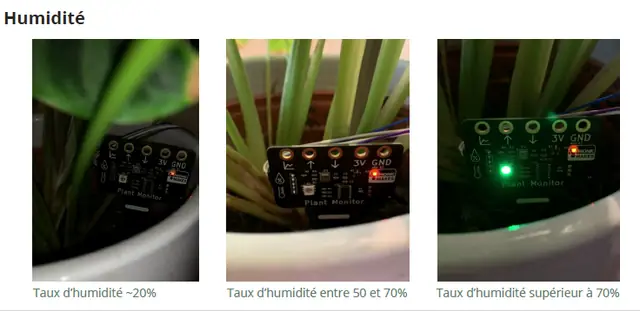
The next 2 lessons take the form of practical work. In pairs, students must choose a problem and a measurement to be carried out. They are responsible for choosing the sensor they will build (subject to validation by the teacher) and with which they will carry out the measurements (for example, measuring the alcohol vapor above a glass of beer/wine). Each pair is given an Arduino board (open-source electronic boards used to create interactive electronic objects). They then assemble a Screw Shield kit and install it on the Arduino. This additional module makes it easier to connect a screen and one or more sensors, such as a temperature sensor. The whole construction process requires them to learn how to use a soldering iron.
As well as building the system, the students have to choose how the data is to be stored and communicated, and program its acquisition. The code they produce is recorded in GitLab. This is followed by testing, data recovery and data analysis.
The final lesson is devoted to pooling the results through an oral presentation. Each pair presents its design to the whole group for 5 minutes. They must explain and demonstrate how the project works overall. The assessment is based on the functionality of the sensor and the understanding of the process, including the understanding of the code, some of which they may have taken from the internet or generated with the help of AI. The code is shared with the teacher via the institutional Gitlab platform. This enables the students to familiarize themselves with the platform, to collaborate within the pair, to receive help from the teacher, and for the teacher to assess the software part of the project. Students are also required to write a 2-page report to supplement their oral presentation. At the end of the course, each pair receives a positive evaluation sentence for their project.
Such a course requires a significant amount of material and supervision.
The format of the course is not only fast paced, but also very eclectic, as students are given a wide choice of projects to work on. This requires the teacher to have a broad mastery of all possible projects, and therefore solid experience. Having the support of an assistant is important, even if the assistant is not an expert. The mistakes that students make are often very basic.
You also must take into account the fact that a lot of tools have to be bought, and students find it difficult to organize them. Losses of equipment due to assembly errors also need to be considered. One solution might be to get in touch with a repair lab that can provide materials and resources. The teacher also suggests that students who want to keep their project can buy another kit and keep the one they have assembled.
“I really like the concept of this course. I find it interesting to learn about the manufacture, operation and use of field sensors and I think it can be very useful. It’s a very hands-on course, which I really appreciate. The exercises proposed in class on field measurement methodologies seem to me to be good for understanding the various methods applicable depending on the situation.” “We learn how to make and handle a sensor, very practical approach.” “Making a sensor yourself is a great experience and opens up a wide range of applications.”
Same innovation type

Same innovation type

Same innovation type