

Same innovation type
AI and critical thinking
Lettres
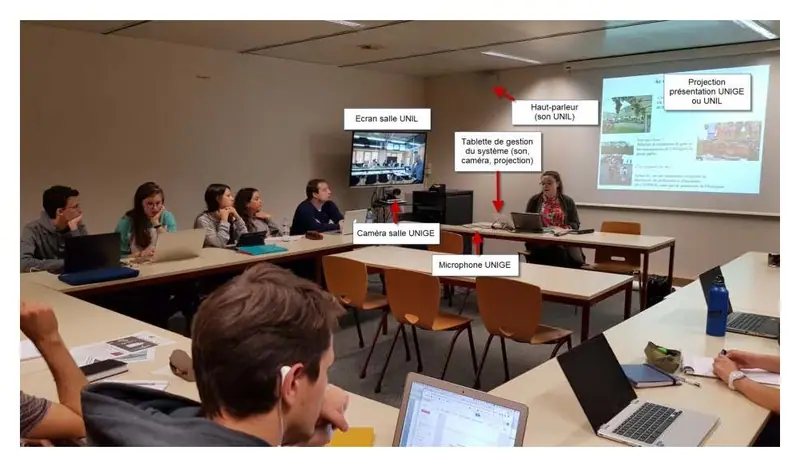
This classical archaeology seminar is offered face-to-face at the University of Lausanne and Geneva, with videoconference courses shared between the two institutions. Students work in mixed pairs and make presentations projected live in both rooms.
Within the framework of the Triangle Azur (Universities of Geneva, Lausanne and Neuchâtel), teachers try to motivate students to take courses at a partner university. This mobility is very limited because of the travel time, the costs involved and the inevitable overlapping of schedules. With the Mobilettres program, some teachers are required to travel to teach their courses at one of the program’s partner universities.
The Classical Archaeology Unit of the UNIGE and the Institute of Ancient Sciences (IASA) of the University of Lausanne (UNIL) offer complementary university courses in archaeology with local specificities. In the interest of allowing students to benefit from this complementarity, the teachers of the two universities have already collaborated, in particular at the level of doctoral programs. They have also recently set up a shared online seminar for Bachelor’s students by videoconference system.
Project implementation
This classical archaeology seminar is offered in person for students from Lausanne and Geneva in their respective universities. In order to contribute to the collaboration between the two universities and to bring together complementary skills, the seminar is shared by videoconference. The teachers from each university, after agreeing on the content of the course, share the presentation and the discussions during each session and allow the students to benefit from a course with two voices. This seminar, which takes place simultaneously in both universities, is also recorded and made available on Mediaserver.
In order to maximize the collaboration between students from both universities, the teachers ask them to carry out a project in mixed pairs: a student from Geneva must collaborate with a student from Lausanne. The students must prepare a file presenting their bibliography and their plan before sending it by email to the teachers for revision. The management of work outside of the seminars is left to the free choice of the students who sometimes meet in Geneva or Lausanne or work remotely.
The evaluation of the seminar is based on the presentations made by the pairs. The videoconference system with 2 screens allows the mutual projection of the presentations live in the 2 rooms. Following each presentation, discussions are initiated between peers. The teaching team also gives individual feedback to each pair. The Geneva students must then submit a written report which is evaluated and graded.
The videoconference presentation system also allowed the intervention and direct participation of one of the two teachers during a short research trip to Algeria. The students were thus able to attend a live archaeological excavation and benefit from the explanations of the excavators on site. The teaching team would like this first test to become more systematic in the course. For example, for students who are more advanced in their studies and who are doing internships on archaeological sites in different parts of the world (Sicily, Albania, Greece), there would be many opportunities to integrate them into the seminar.
In terms of logistics, apart from the provision of the videoconferencing system by the IT and audiovisual services of the two universities, the implementation of the shared seminar only required the synchronization of the seminar schedules, which did not pose any problem. The advantage of this system is that it is based on the traditional teaching in the field, which simplifies its application and requires few changes in habits.
For the teacher, the use of the videoconferencing system requires some management (launching the recording, operating the camera, sharing the projection via the management tablet, etc.), but this is easy and does not require any particular skill. It does not interfere with the teacher’s concentration.
The application of the principle of teaching in the form of a shared seminar by videoconference can be easily transferred to other fields, as several rooms are already equipped within the UNIGE. The project therefore has a very high transfer potential. The advantage of the system lies in the fact that it does not require any particular technical skills and only a little coordination between the teachers of the two universities. In principle, it is also possible to apply it in a larger framework, i.e. by linking 3 universities or by allowing external persons to follow the course at a distance.
The system also makes it very easy to integrate external teachers on an ad hoc basis. Instead of asking specialists from far away to travel, it is possible to ask them to make a presentation by video conference. This system would save time and money while bringing to the course the added value of the professional in his or her work context.
This system allows for collaboration between universities at a lower cost. The instructor points out that this way of collaborating requires little effort other than some coordination to agree on the course content.
The teachers noted that the inter-university collaboration was favourable to the quality of the presentations, by creating an emulation between the students of the 2 universities.
“This seminar allows us to exchange with other students and professors who share the same interests as us, which is very beneficial for both parties! It also gives us the opportunity to see the courses that are offered in Lausanne by talking to students from Lausanne.” “The seminar topic is very interesting and the concept of video conferencing with Lausanne is new and original.” “Despite the many problems with videoconferencing, I found it very interesting to be able to exchange with the archaeology students in Lausanne. It’s also a different and innovative course format.” “Perhaps we should have taken the two classes on a field trip together so that everyone could meet each other? The video conferencing equipment had some technical problems several times, so we often lost part of the hour of class, which is a shame. Also, I find it difficult to stay attentive to a class when the teacher is on the other side of the screen.”
Same innovation type

Same innovation type

Same innovation type