


Same innovation type
Pedagogical files
Lettres

This course offers cultural visits in Geneva. Students then explore the links between these visits and their research project, with the choice of writing a pedagogical dossier or presenting their work at a public conference.
The objective of this course is to teach students the tools necessary to master research on musical phenomena. The profile of the students participating in this course being very heterogeneous (musicology, ethnomusicology, Haute Ecole de Musique), the teacher’s wish is to find a theme allowing all of them to use their skills. She also wishes to interest the students in this particular content and to establish an interaction between them. For these reasons, she proposes that they form a research team around a specific project. This project will lead to a public production at the end of the semester (conference, conference-concert, production of a pedagogical file, cultural mediation).
Project implementation
The course is presented in the form of 12 weekly sessions of 2 hours each, alternating between theoretical presentations (e.g. learning about bibliography) and visits to cultural partners in Geneva (the Conservatory Library, the Musicology Library, the Grand Théâtre de Genève, the Geneva Museum of Ethnography - MEG). The objective at the end of the semester is to carry out a research project in musicology by following the key steps and using the appropriate tools.
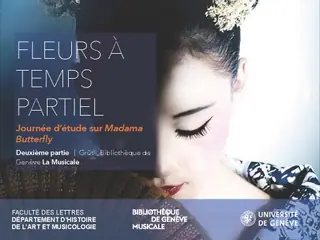
The first step of a project consists in defining the subject. The theme is determined during the first sessions, most often in connection with the cultural visits made. In 2015, for example, the teacher chose the opera Madame Butterfly as the subject of research. The starting point for the students’ research work was the exhibition “Madama Butterfly’s Buddhism” proposed by the MEG. The students, divided into 4 groups of 7, had to investigate the links between the exhibition and the opera according to 3 different axes: Madame Butterfly between Japan and Japonism, Madame Butterfly through old periodicals and Madame Butterfly in Geneva.
Groups are formed freely, with students registering on Moodle in the group with the theme that attracts them most. Outings are organized to allow students to meet people from the cultural world, such as employees of museums and the Grand Théâtre, and to visit/workshop in the music libraries of the City of Geneva. The InfoTrack platform is also suggested by the teacher to provide students with additional information on the general bases of research.
At the end of the semester, students have the choice between writing a 10-page pedagogical dossier or participating in a public conference to present their work. In 2015, the conference program included a presentation of their project by each group of students, a debate led by two specialists in lyrical theater following a presentation by each of them, and an instrumental performance, presented by the head of the Geneva Conservatory library, offered by the students.
Thoughts and advice on implementing a similar project
The teacher emphasizes that for such a teaching format, it is important to give students a precise framework. It is important to be particularly clear about the expected work and the tools to carry it out. It follows that this format is time-consuming in terms of feedback (particularly for the re-reading of the files), but also in order to schedule meetings with the various external collaborators, the final presentation session and the visits. It is therefore important to ensure that the sessions are well structured.
For the students, the teamwork and the possibility of putting theoretical knowledge into practice within a concrete project are very stimulating. The results are noticeable and rewarding.
Student feedback
“This course allows us to develop a solid foundation to better approach our research. The visits to the various libraries in Geneva and to the theater are very interesting.”
“The library visits, the assignments to be handed in (file, bibliography) that train us well in musicological research.”
“Meeting with different actors of the cultural life of Geneva (musical resources of the Grand Théâtre, director of the Offenbach opera, etc.). Discoveries of the different Geneva institutions related to musicology.”
Same innovation type

Same innovation type

Same innovation type